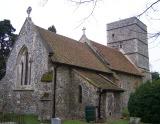
Strethall
SKULDUGGERY IN THE HISTORY OF STRETHALL

|
Strethall
SKULDUGGERY IN THE HISTORY OF STRETHALL |
|
The Saffron Walden Historical Journal was launched in 2001 by the Saffron Walden Historical Society and all issues to date have been kept in print. It is now proposed to discontinue reprints of the early issues and instead provide the articles online, via the Recorders of Uttlesford website. Articles are reproduced by kind permission of the authors and remain the copyright of the Journal. Their publication on this website does not constitute permission to copy into any other medium, without the express permission of the Editor, who can be contacted through this website. Permission will normally be granted for non-commercial usage. The articles may be used for educational and research purposes by bona fide researchers. They can be found either under the place to which they relate or, if covering a wider area, under the Uttlesford history section. Further articles will be added twice a year, but only several years after original publication. Those wishing to contact the authors can do so via the editor. Please note that in most cases the original illustrations are not included but can be seen by consulting the original journals held at Saffron Walden Town Library.
Jacqueline
Cooper,
Editor
Article
from Saffron Walden Historical Journal No 1 (2001)
"Skulduggery
in the History of Strethall"
by
David Melford
Small parishes do not necessarily have brief histories. Strethall (600 acres, 11 houses - current population 22) is arguably the smallest parish in Essex but its origin can be traced back well before Domesday when the 10 hides of land sold by King Aethelred to Aelsinus, Abbot of Ely in 1008 AD were shortly afterwards divided in two. Five hides remained with Littlebury and became Littlebury Green while the other five (the 600 acres) eventually became the Manor & Parish of Strethall, circumscribed by boundaries that have endured to the present day.
Even very small communities, when surveyed over almost a thousand
years, can
be expected to have accumulated an assortment of misdeeds, the records
of
which have in some cases survived.These
can make interesting reading in their own right as well as offering
some small insights into the times in which they took place. Distilling
a
selection of them from a wide variety of sources has yielded the
following examples.
There was for example:
In 1066, two men, William and Alwin, farmed Strethall for the Abbot of
Ely
and were not permitted to leave the land - or so the Domesday Book
tells us. This cosy arrangement was upset by one Hugo de Berners, who
had arrived with William the
Conqueror. In line with established custom and practice for victorious
invaders, he usurped 3
hides of land in Strethall - some 60% of the parish.
Parochially speaking this was larceny
on a grand scale and, to give credit where it is due, King William soon
obliged his friends to return such items of real estate to their
rightful owners. A Charter recorded in the Liber Eliensis dated 1082 -
four
years before the Domesday Book - lists the miscreants and the amount of
land stolen
and goes on “Let
the Abbot of Ely reclaim the lands that these men hold; if the Abbot is
able to show that the above lands are part of the demesne of his Church
and if the above men cannot
show that they hold these lands by my gift”.
The Abbot in question was now a Norman, Abbot Simeon, and he solved the
problem of reclaiming his property by a simple device. The Abbey was
deemed a
Barony and obliged to provide 40 knights for the Kings
army when required to do so. In effect, Simeon allowed the usurpers to
keep their land in return for helping him with this military
obligation. Thus Hugo de Berners came to
hold Strethall for one knights
fee. The de Berners held Strethall for almost 200 years until 1263 when
they were involved in another major misdeed:
This time it was a John de Berners who joined Simon de Montforts
rebellion. The rebels were defeated at the Battle of Evesham in 1263
and their lands were forfeit. Strethall thus became Crown property once
more and two years later, at the Battle of Chesterfield, John de
Berners was
killed.
It could be argued, however that these weighty affairs qualify as sins
of
state and are scarcely the rustic peccadilloes that could be expected
to
characterise a tiny hamlet. They had little effect on daily life in
Strethall which
revolved mainly around subsistence farming, grazing sheep on the chalk
hills, spinning and probably weaving. This modus vivendi was to persist
until another
650 years had passed. Nevertheless, in 1309, there is evidence of a
minor
ripple in an otherwise bucolic scene - a monumental mugging - although
even this
rural punch-up was brought to the attention of the King.
The
Calendar of Patent Rolls records that Henry Le Drivere of Strethall
joined with no fewer than 27 others, led by Alice de Bello Monte, in
assaulting the unfortunate Michael Cherne at Elmdon. It is tempting to
think of Alice
as a somewhat muscular lady of Wagnerian proportions, egging on her
overwhelming force to beat up Michael Cherne who must have offended her
deeply.In
fact she held one of the Elmdon manors in chief and hence was indeed
something of a force to
be reckoned with.
We
would not know about the incident at all were it not that a
whistle-blower
was present in the person of Nicolas de Segrave who later “held
the Manor of Heiden of the King in chief by the serjaunty of holding a
basin and towel in the the king’s
hall on the day of the kings
coronation”. The
consequence of his intervention was that the king set up a Commission
of Oyer and Terminer to enquire into the incident. This should have
revealed the cause of the dispute and the outcome but unhappily,
according to
the Public Record Office, no records of such Commissions survive from
this early a date.
The next misdeed has no national overtones and is a simple matter of
debt.
This was taken very seriously however in 1435 and the nature of the
debt in
this case is rather intriguing.
1435 AD. The Welshing Parson
The Parson involved was John Waleys, clerk, who, together with John
Pound,
was appointed to the living in Strethall in 1433 by the then Lord of
the
Manor, William Bredewardyn. Newcourts
Repertorium which records this appointment says also that it was
twinned with Broxbourne and that the incumbent
“permutated” to share the livings. John Waleys must
have resigned within the year
because John Pound's
appointment is said to be “per
resig. Waleys”. The
cause of Waleys
resignation may have been that he had got himself irretrievably into
debt and had ended up being pursued in a court of law by his main
creditor.
The fact that he was in debt is not in itself a great surprise. At this
time, Strethall was a very poor living and remained so until the
arrival of
John Gardner, a wealthy Inner Temple lawyer, as Lord of the Manor in
1500.
It cannot be without significance that, of the nine rectors
appointed before his arrival, eight, including Waleys, all resigned,
the ninth having died in office after two years. After 1500, the next
eight
rectors all died in office, one of them holding the living for 63 years.
What is rather remarkable, is that John Waleys
debt
was to Ralph Pennarth, citizen and tailor of London, to whom he owed 40
shillings. The journey from Strethall to London in 1433 must have been
hazardous, time-consuming and expensive. For a country parson from a
poor living to have his clothes made by a London tailor could be
thought a somewhat extravagant undertaking. The fact
that we know about the incident at all is due to the fact that Waleys
failed to appear before the magistrate to answer the charge brought
against him.
Nevertheless, he must have discharged the debt and/or produced some
very convincingexplanation, for he was pardoned for this non-appearance
- and it is this pardon that in 1435
is recorded in the Calendar of Patent Rolls.
Robert
Turner of Strethall, who described himself as a husbandman, was a
wealthy farmer with both freehold and copyhold land in Strethall and
the
neighbouring Catmere End and at least two houses.When he died in 1558,
he provided
handsomely for seven children, the
eldest of which was John Turner. Sometime shortly before 1560, Robert,
or more likely John, built a new house to the latest lobby-entrance
design with
a cross wing and central chimney stack.Such
ostentation seems to have attracted the undesirable attentions of one
Lawrence Pave or Pathe. The outcome is summarised in the following
extract from the
records ofthe General Sessions of the Peace held
at Chelmsford [Assizes] :-
“...Thursday after Easter, 1560, before Anthony
Browne and Rich. Weston, justices of the Common Pleas, Wm.Bendlowes,
serjeant-at-law, and Edmd.
Bockinge Esq., justices of the peace on the oaths of [a list
of 17
names], who say that Lawrence Pave alias Pathe lately of
Stratford in the county of
Herts., yeoman, on the 27th day of March in
the second year of the reign of Elizabeth, by the Grace of God, Queen
of England, France and Ireland, suddenly with arms, namely staffs,
swords
and cutlasses, burglariously entered the dwelling house of the same
John
Turner at Strethall, about 7 oclock
at night, and put him in fear of his life, and stole from him 13s.4d in
money.
Guilty; judgement given, to be hanged.
It
seems
likely that “ Stratford”
is a simple mistranscription for
Stortford, travel in those days being a matter of some difficulty,
particularly when burdened with “staffs,
swords and cutlasses
Recusancy
qualified as a crime in an era when adhering to the Catholic faith and
celebrating Mass was against the law of the land. Thomas Crawley, Lord
of the Manor of Strethall, was a member of one of the wealthy and
powerful Catholic families who endured considerable harassment and
persecution
during the reign of Elizabeth.
He was imprisoned, fined on numerous occasions, forbidden to leave
London and a constant target for malicious informers. Finally he
decided enough was enough and, rather than abjure his faith, he sued
for peace, petitioning the
Queen and contracting with Her Majesty in the following words recorded
in a
document held by the Public Record Office:-
“I
Thomas Crawlie being called before her maties
Commyssioners the xxiii Daye of Marche the xxviiith yeare of her maties
raigne to understand what yearlie portion I would transfer to her
highness receite of the Exchequer, to be exempted from a statute made
against
recusants, free from all vexation of informers touringe the shire. In
considerton whereof, I am contented to
paye into her maties receite the sum of thirtye poundes by the yeare
and for her maties gratious favour herein towards me, I do acknowledg
myself bounde
to praye unto Almmightie God for her longer lyffe and prosperous
raigne.
And thus I am most willinglie to doe.
By me Thomas Crawlie”.
In other words, he bought the right to cleave to his faith as long as
he adopted
a low profile and made no trouble. Thirty pounds was a very
considerable sum
to pay annually even for a wealthy man and shortly afterwards he sold
Strethall to his brother-in-law, Giles Greene, another staunch Catholic.
1607 AD. Seduction in the Rectory
Although not exactly a crime, seduction must be one of the most common
misdemeanours to occur in any community - although not always in a
rectory. The parties
involved were Robert Parker and Agnes Ewens, both of whom at the time
were
servants to Francis Lynsell, the longest-serving incumbent Strethall
has ever had
and whose 63 years service has already been mentioned. It appears that,
at this
time, the costs of raising a child born out of wedlock fell upon the
parish
unless the responsibility could be laid elsewhere. As soon as Agnes
condition was discovered, Francis Lynsell took the case to the Essex
Quarter
Sessions at Easter 1607.
Robert Parker was the son of John Parker of Elmdon, husbandman. To
judge from
their wills, those describing themselves as husbandmen were
comparatively
affluent.
Certainly this is true of the Turners of Strethall whose wills in
several cases were written by Francis Lynsell
himself since he was probably the only person available who was
sufficiently literate to perform this task. The case was therefore
brought against
John Parker for his son Robert
Parker “late
servant to Mr Lynsell”
(Robert had clearly been sacked) who was “charged by
Mr Lynsell with begetting Agnes Ewens, servant also in the house of the
said Mr
Lynsell, who therefore required security on his behalf and that of the
rest of the parishioners for saving harmless their parish from the
further charge of the said child”. Robert was
ordered “to
appear and not depart before
some further order be taken, until the said Agnes be delivered, and to
keep the peace towards the said Mr Lynsell”.
This last admonition was probably justified. Robert would not have been
popular
at home, had lost his job and probably saw his former employer as the
author of
all his misfortunes. In those days, it would not be unusual if the
child died
at birth but Francis Lynsells
pre-emptive action clearly established responsibility whatever the
outcome.
This rather recherché misdeed is a crime against an
ecclesiastical law which may seem somewhat arcane to the layman. The
relevant provision is simply
that a clergyman may not purchase the next presentation to a living for
himself - particularly if the living is already vacant.
John de Berners started something of a trend for Lords of the Manor of
Strethall when
he joined the rebellion against the King in 1263. Thomas Crawleys
recusancy in Elizabeths
reign continued the trend and during the period of the Commonwealth it
is no
surprise to learn that the then Lord of the Manor, Robert Newport, was
a staunch
Royalist. This allegiance proved disastrous for the Newport
fortunes and it is understandable
that, when a vacancy occurred in the living in Strethall, Robert was
not averse to profiting from the opportunity to exercise his advowson.
John
Buckley was his appointee and his incumbency
lasted only three months and three weeks. For such prompt action to be
taken to remove him, someone must have informed the authorities and a
likely
suspect is John Debnam, his successor.
Not the least surprising aspect of this bizarre affair is that the
crime turned
out not to be the killing but the burglary that the victim was engaged
in when
he was killed. Comparisons with the recent case of the Norfolk farmer,
Tony
Martin, (sentenced to life imprisonment for shooting the gypsy lad Fred
Barras
while the latter was burgling his farmhouse late at night), are
particularly
striking.
Nehemiah Perry, in the middle of the 19th century, lived in Strethall
Hall and
farmed virtually the whole of the
parish of Strethall. He was a flamboyant, hard-drinking character who
had his
clothes made in Bond Street
and who, early in his career, had fallen for Sarah, a young gypsy girl.
In due course he married her in rather a hurry by special licence -
probably
she was pregnant - and she bore him three children none of whom
survived him.
After some time, Nehemiah tired of her and Sarah was banished to live
in a nearby
cottage on his farm, dire consequences being threatened to any man who
should
visit her. Her kin were displeased at this treatment, swore vengeance
on
Nehemiah and the scene was set for the tragic consequences that ensued.
The night of Wednesday, February 28th/ March 1st, 1849
was cold and snow lay on the ground. Shortly before one
in the morning, the household at Strethall Hall was aroused by a crash
downstairs (it subsequently transpired that the burglars had knocked
over a plate rack while entering via the scullery window). Nehemiah
came out
on the landing with a shotgun and a figure wearing a sacking hood with
eyeholes cut in it, appeared at the bottom of the stairs. In one hand
he carried a
lantern and in the other, what appeared to be a bludgeon. As he
advanced up the
stairs, Nehemiah shot him dead at virtually point blank range. The
victims
companions dragged the man into the back parlour and then fled.
On the Thursday morning the police were called, statements taken and a
Coroners Jury convened to meet over the body on the following Saturday.
The Foreman
of the Jury was a Mr Bewsher who ran the mill at Littlebury and
Nehemiah was
probably one of his best customers. Witnesses were sworn - although,
interestingly, Nehemiah was not - testimony was given and eventually
the Foreman rose
and said that the jury were unanimous in considering it Justifiable
Homicide and
that it was their bounden duty to express their feelings at the conduct
of Mr
Perry who was not only entitled to the thanks of the Jury but of the
whole
neighbourhood and of the country generally. The Coroner then said he
entirely
concurred in Mr Bewsher<s
observations and begged to add his congratulations to those of the Jury.
The body had not yet been identified and so was then placed in the
tower of
Strethall Church for the populace to
view. An enterprising sexton charged them 3d for this privilege and
large numbers came. The following day, Sunday, the turnkey of the
Borough
gaol in Cambridge arrived and recognised the corpse as that of Abraham
Green, a well known poacher,
who had been in his gaol on several occasions.
All the above was reported in detail in the broadsheet of the time, the
account
closing with the words “The
body of Green has been interred and the usual churchservice read over
it”. This
was not true. Nehemiah packed up the body in a game hamper and sent it
to his medical adviser in the Department of Anatomy in Cambridge. It
was subsequently transferred to the Museum of Anatomy
and, when this collection was dispersed, the skull of Abraham Green
eventually ended up in the Department of Biological Anthropology and
about half of
the rest of his bones in the Museum of Zoology.
Neither Nehemiah nor anyone else at the time saw the slightest need to
justify
his action. Nevertheless, in fairness it should be remarked that
intruders armed with clubs who persist in their intrusion after
knocking over a
plate rack and waking the household, may well have had some more
serious
intent than burglary on their minds.
Conclusion
It may now be necessary to emphasise that the present population of Strethall, is, of course, composed entirely of peace-loving, law-abiding citizens who pay their taxes with alacrity and good humour. Over the past thousand years, however, there is persuasive evidence that they have, on occasion, strayed somewhat from the straight and narrow.
Bibliography
Liber Eliensis,E.O.Blake, 1962. Royal Historical Society, London.
Domesday Book, vol 32, Essex ; Phillimore, London 1983.
Miller E. The Abbey & Bishopric of Ely, Camb.Univ.Press,1951.
Powicke F.M. Henry III and The Lord Edward, Oxford Univ.Press, 1947.
Calendar of Patent Rolls. (available in the Official Publications Room, Cambridge University Library.)
Newcourts Repertorium, 1710, vol. 2, Motte, London.
Essex Record Office website, SEAX.
Public Record Office Document: Ref.PRO SP 12/187 (Thomas Crawley sues for peace).
Public Record Office website.
The Cambridge Chronicle and University Journal, Isle of Ely Herald and Huntingdonshire Gazette
issues for March 3rd and 10th, 1849. (available on microfiche in the Cambridge University Library)
Wherry G., Notes from a Knapsack, Bowes & Bowes, Cambridge, 1909.
NOTE
Fuller details of all references except those on the web sites can be found in: D.A. Melford A History of the Manor & Parish of Strethall (available in Saffron Walden Town Library, Cambridge University Library and Essex Record Office). This contains a full transcription of the Cambridge Chronicle articles.
©
Saffron Walden Historical Journal 2001.
